Blog
NAMM 2026 Takeaways: AI Hype, Rust, and an Industry at a Crossroads
Reflections from NAMM 2026 on a more cautious industry mood, the gap between AI conversation and real products, the growing interest in Rust, and what Native Instruments’ insolvency signals for what comes next.

News
NAMM 2026 Takeaways: AI Hype, Rust, and an Industry at a Crossroads
Reflections from NAMM 2026 on a more cautious industry mood, the gap between AI conversation and real products, the growing interest in Rust, and what Native Instruments’ insolvency signals for what comes next.
NAMM 2026 Takeaways: AI Hype, Rust, and an Industry at a Crossroads
NAMM 2026 Takeaways: AI Hype, Rust, and an Industry at a Crossroads
A more cautious mood at NAMM
One of the strongest signals coming out of NAMM this year was a general sense of caution. Not fear, but reflection.
In conversations with developers, founders, and people who have been in this industry for a long time, the focus had shifted away from “what can we build next?” towards bigger questions. What are musicians actually seeking that isn’t already available? What problems are genuinely unsolved? How do we create more meaningful connections between creators and the tools they use?
There is no shortage of software in our space. The challenge now isn’t technical possibility, but relevance. That feels like a healthy place for the industry to be, even if it’s an uncomfortable one.
AI is everywhere in conversation, less so in products
AI dominated panels, talks, and informal discussions at NAMM. Walking the show floor, however, told a different story.
With a few notable exceptions, vocal modelling tools like Dreamtonics being a good example, most products felt largely conventional. There is a clear gap between how much AI is being talked about and how much it is actually being used in production-ready tools.
It feels as though many companies are still trying to understand where AI genuinely adds value, rather than forcing it into products because the conversation demands it. For now, the hype is ahead of the reality.
Why Rust keeps coming up
One interesting technical trend I’ve noticed recently is Rust beginning to appear more frequently in audio-related projects.
Over the past few weeks, I’ve seen a cross-platform audio engine written in Rust, as well as plugin-generation tools using it too. That surprised me. Historically, technology trends tend to move towards making things easier and more permissive. Rust, by contrast, is stricter and harder to learn than C++.
That strictness may be exactly the point.
When AI tools are generating or assisting with code, having a compiler that aggressively enforces correctness can be a real advantage. C++ will often compile code that later fails at runtime. Rust is far less forgiving. It’s harder upfront, but it can lead to more robust results.
Alongside this, we’re also seeing experienced developers openly discussing how tools like Claude are helping accelerate development. Not by replacing expertise, but by amplifying it when used by people who deeply understand the domain.
Native Instruments and a structural wake-up call
The news that Native Instruments has entered insolvency is sobering, even if insolvency is not the same as outright bankruptcy.
NI has shaped the audio software industry for more than 25 years. Products like Kontakt, Reaktor, Massive, Komplete, Traktor, and Maschine are deeply embedded in the workflows of millions of musicians. I also have many colleagues there, and we’ve had positive partnerships with NI in the past.
What this moment seems to highlight is not a failure of products, but a structural challenge. The tools are clearly valuable. The customer base is enormous. But scale, legacy, and brand recognition don’t automatically guarantee resilience.
Whatever comes next for NI, whether that’s restructuring, acquisition, or something else, it likely needs to look different from what came before.
An industry recalibrating
Taken together, these signals point to an industry in the middle of a recalibration.
AI remains promising, but meaningful products are still catching up with the conversation. Rust may be gaining traction because it pairs well with AI-assisted development when correctness matters. Experienced developers are demonstrating that AI tools are most effective when combined with deep domain knowledge. And the situation at Native Instruments is a reminder that even the biggest names must continue to adapt.
The common thread is a renewed focus on meaning. The teams that thrive over the next few years will be the ones asking better questions and building tools that genuinely matter, rather than simply adding to the noise.
I’d be very interested to hear what others are seeing, particularly around AI adoption, Rust, and how sustainability is being discussed inside teams right now.
Joshua Hodge
The Audio Programmer
More Tutorials
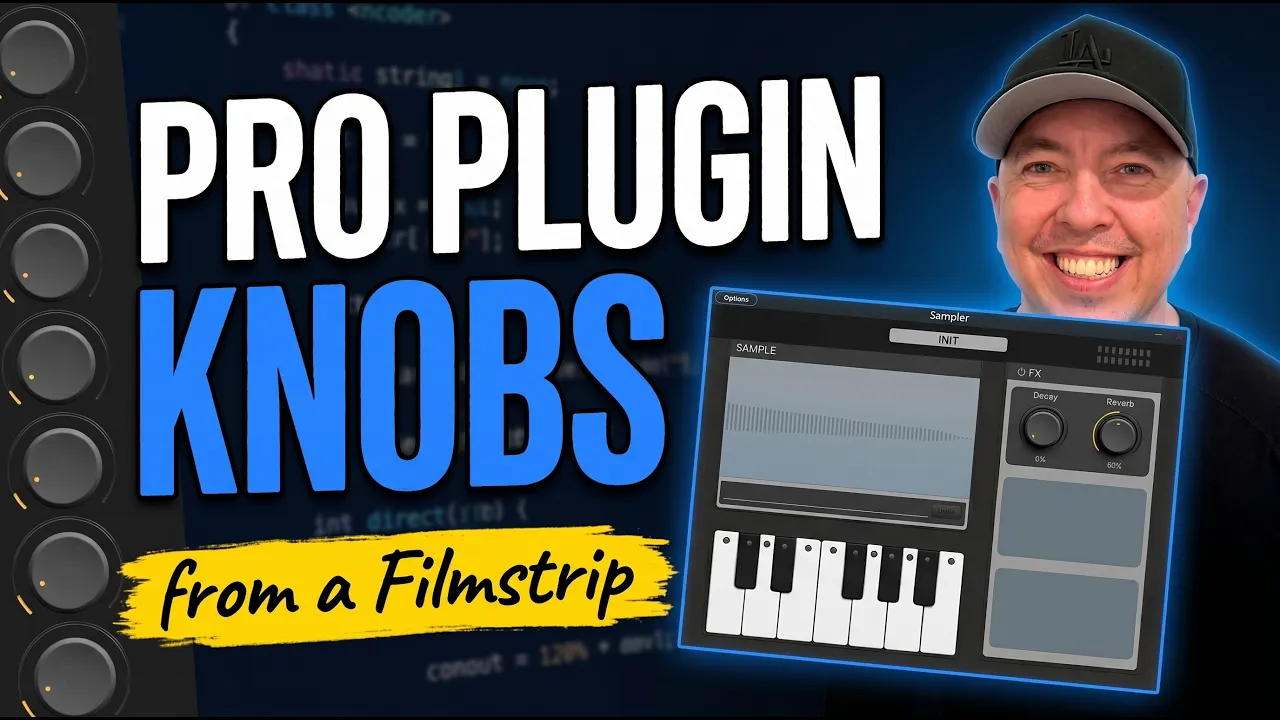
We Built a Multi-Player Audio App With AI: Intro to Audiotool Nexus
Nexus is Audiotool's new extension layer that lets a browser-based app read and write a live project in real time, something a traditional VST can't do. Silas Gyger, lead engineer at Audiotool, shows how far an AI agent can take you by building three working apps from scratch.

More Meetups

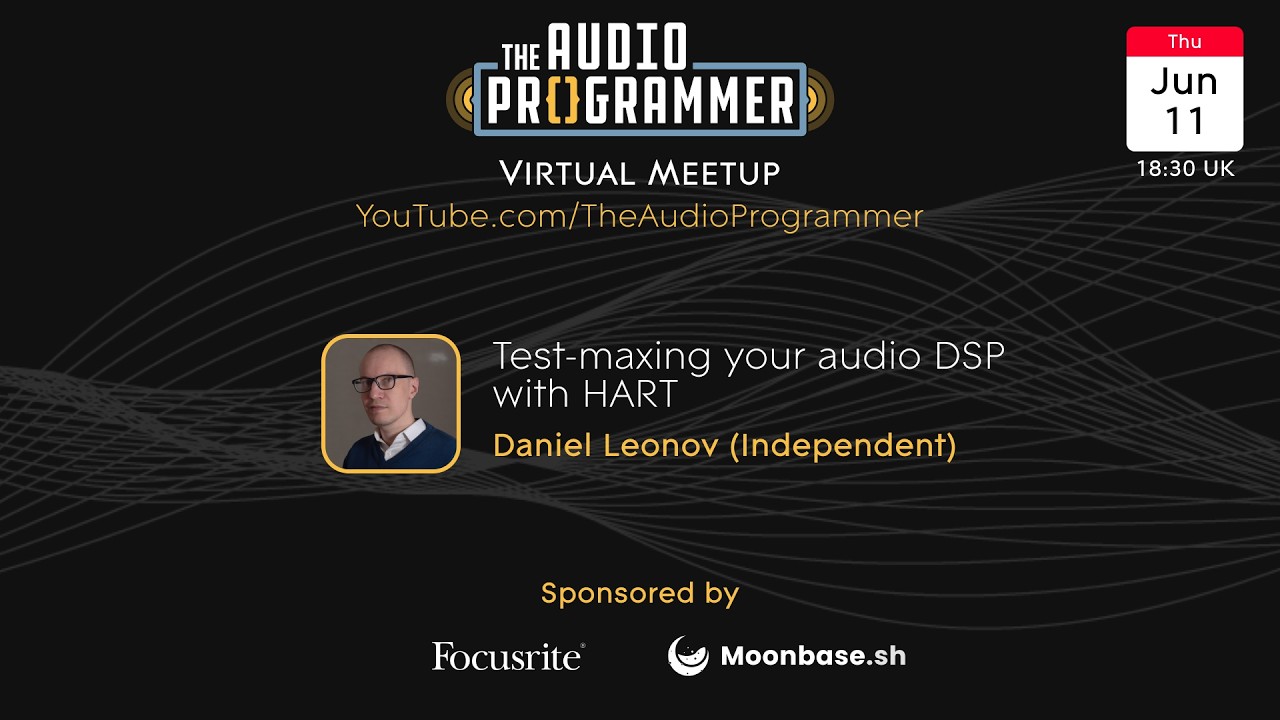
The Audio Programmer Virtual Meetup | April 9th, 2026 @ 17:00 UK
Jani Huoponen, Scott Kramer, and Claus Trelby explore Eclipsa Audio – Google and Samsung's open-source spatial audio format – and what it means for creators working across music, film, TV, and the open web.