Blog
Tesst


News
Tesst
Tesst
Tesst
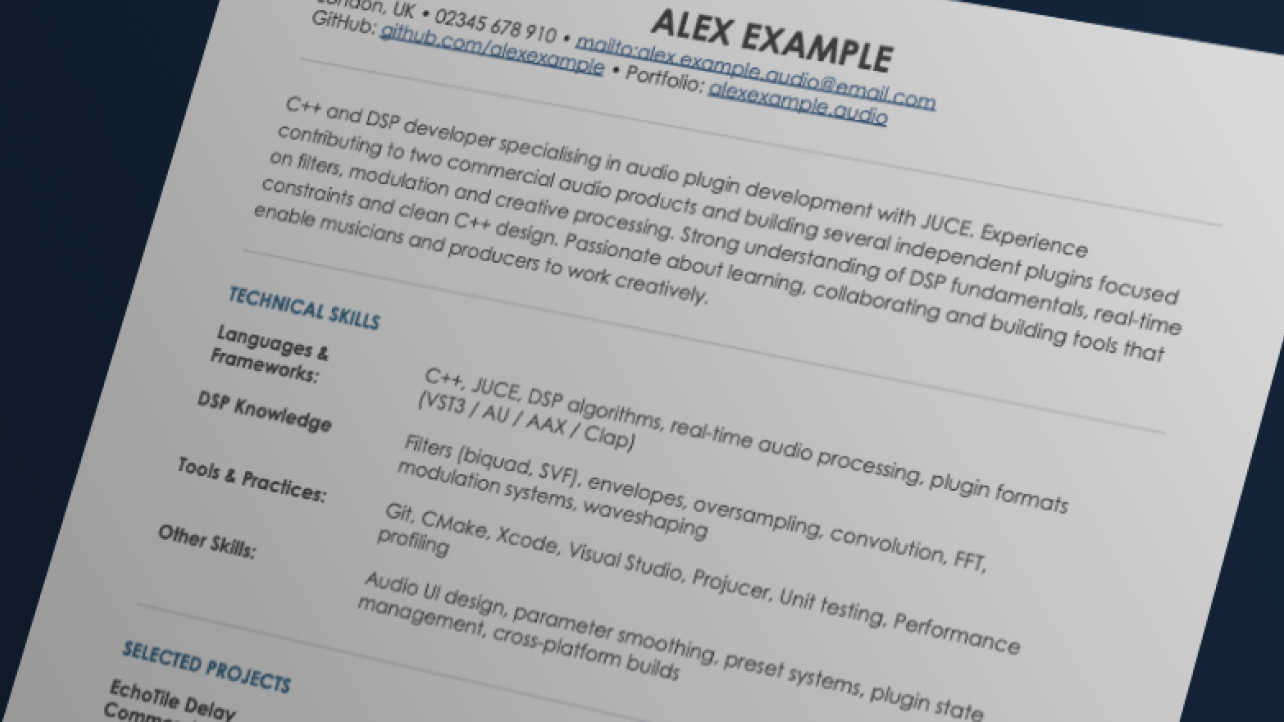
Breaking into the audio industry can feel intimidating – especially when your CV is the first (and sometimes only) thing a hiring manager sees. But a strong, well-structured CV can dramatically increase your chances of landing an interview, whether you’re applying through The Audio Programmer or approaching companies directly.
This guide walks you through exactly what audio developers, DSP engineers and plugin creators should include to stand out in a competitive industry.
<div class="divider"></div>
1. Understand What Hiring Managers Actually Look For
Hiring Managers and Recruiters are usually handling a lot of applications so want to be able to see key information at first glance. When they first open your CV, they're mainly looking for three things:
- Skills – the technologies, frameworks and tools you can use
- Experience – evidence that you’ve applied those skills
- Impact – what you contributed, improved or delivered
If these aren’t immediately visible, your CV risks being overlooked, even if you’re highly capable.
2. Keep It Clear, Simple, and Easy to Scan
Hiring managers in audio are often developers themselves, which means they value clarity far more than decoration.
Do:
- Use clean headings and consistent formatting
More Tutorials
More Meetups


More News


More Articles

NAMM 2026 Takeaways: AI Hype, Rust, and an Industry at a Crossroads
Reflections from NAMM 2026 on a more cautious industry mood, the gap between AI conversation and real products, the growing interest in Rust, and what Native Instruments’ insolvency signals for what comes next.

Is Music Tech Heading for a Collapse...or a Revolution?
A look at the current state of music technology and why innovation feels stuck – along with the key technical and industry pressures behind it. Drawing on insights from the Audio Developer Conference, this video highlights the patterns holding developers back and the opportunities that could spark the next wave of creativity in music tech.